
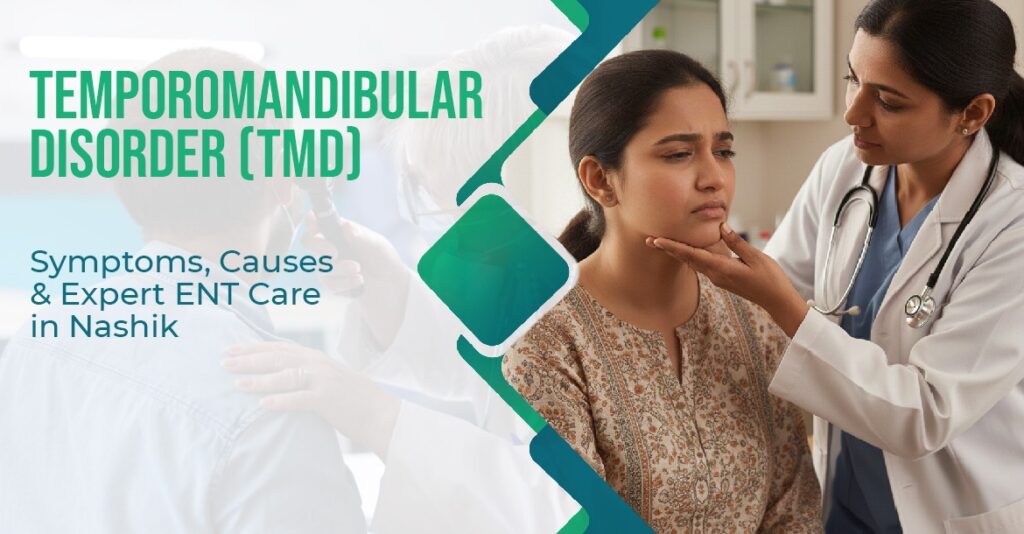
Temporomandibular Disorder (TMD) is a condition that affects the jaw joint and the muscles that support jaw movement. Many people experience jaw pain, clicking, headaches or ear discomfort without realising that the root cause may lie within the temporomandibular joint (TMJ). At Indorewala ENT Hospital, we regularly see patients who mistakenly assume they have an ear problem, in reality, they are experiencing symptoms of TMD. Our clinical expertise and detailed evaluations help patients receive accurate diagnoses and timely treatment.
In our recent Instagram reel, we demonstrated how the jaw, ear, facial muscles, and surrounding nerves work together. This connection often explains why TMD symptoms are confused with ENT-related issues. This blog provides an in-depth understanding of TMD, its symptoms, causes, and how specialised ENT care can make a significant difference in long-term recovery.
What is Temporomandibular Disorder (TMD)?
Temporomandibular Disorder refers to conditions that impact the temporomandibular joint—the hinge joint connecting your jaw to the skull. It allows you to speak, chew, yawn, and perform essential daily functions. When this joint becomes inflamed, irritated, or misaligned, it can lead to pain and movement restrictions. TMD can affect one or both sides of the face and may gradually worsen if left untreated.
Common Causes of TMD
TMD has multiple triggers, and understanding these can help prevent or manage the condition effectively.
- Jaw Muscle Overuse
Habitual grinding of teeth (bruxism), frequent gum chewing, stress-induced clenching, or uneven chewing patterns can strain the jaw muscles. - Joint Misalignment
Structural issues such as an improper bite or jaw position can affect joint mechanics, leading to discomfort and inflammation. - Injury or Trauma
A sudden impact to the jaw or face can interfere with normal joint function. - Stress and Muscle Tension
Emotional stress often results in unintentional tightening of jaw muscles. - Degenerative Joint Conditions
In older adults, arthritis or cartilage wear can contribute to chronic TMD symptoms. - Response to cold
Leads to involuntary chattering of teeth leading to stress over TMJ
Key Symptoms of TMD
Many symptoms of TMD overlap with ear and facial conditions. Common signs include:
● Pain or tenderness in the jaw joint/capsule
● Clicking, popping, whistling or grinding noises during jaw movement
● Difficulty opening the mouth
● Ear pain or fullness without infection
● Facial discomfort or pressure around the cheeks, temples, neck nape of the neck, shoulder and back
● Headaches linked to jaw or muscle tension
● Pain while chewing or speaking
● Dizziness, feeling of rocking/swaying while stationary or while walking
These symptoms indicate the need for expert evaluation, particularly by an ENT specialist in Nashik, who understands the close relationship between the jaw joint and the ear.
How ENT Specialists Diagnose Temporomandibular Disorder (TMD)
Because TMD symptoms often mimic ear Disorders, ENT evaluation is crucial. At Indorewala ENT Hospital, our specialists carry out:
● A detailed examination of jaw movement
● Assessment of muscle tightness around the face and neck
● Evaluation of ear structures to rule out infections or fluid buildup
● MRI of TMJ
● Checking joint sounds, deviation, and locking during jaw opening
This comprehensive approach ensures accurate diagnosis rather than treating symptoms superficially.
Treatment Options Available at Indorewala ENT Hospital
Most TMD cases respond well to non-surgical treatments. As a leading hospital for ENT in Nashik, we provide a structured and evidence-based treatment plan that may include:
- Medication
Anti-inflammatory drugs, muscle relaxants, or pain relievers as needed. - Physiotherapy and Exercises
Jaw stretching, warm compresses, and guided muscle relaxation to improve mobility. - Behavioural and Habit Correction
Stopping gum chewing, avoiding nail biting, correcting posture, and reducing jaw overuse. - Bite Correction and Night Guards
Custom-made splints for patients who grind their teeth while sleeping.
- Lifestyle Modifications
Stress reduction, diet adjustments, and avoiding hard or chewy foods. - Advanced Interventions
In more persistent cases, advanced ENT-guided procedures or multidisciplinary support may be recommended.
With proper diagnosis and individualised care, patients experience a resolution in pain, improvement in jaw function, and better overall comfort.
Why Choose Indorewala ENT Hospital for TMD Care?
Indorewala ENT Hospital has been a trusted name in ENT care for decades. Patients rely on our expertise because:
● We have highly trained doctors, including an ENT specialist in Nashik, experienced in jaw and ear-related conditions
● Our diagnostic accuracy helps distinguish TMD from ear infections, sinus issues, or neurological problems.
● We offer personalised, conservative, and patient-focused treatment plans.
● Our facility is recognised as a leading hospital for ENT in Nashik, equipped with modern technology and a dedicated care team.
When Should You Seek Help?
If you are experiencing persistent jaw pain, ear discomfort without infection, jaw clicking, or difficulty chewing, early evaluation is essential. Delaying treatment can lead to worsening pain and long-term joint damage.
For expert guidance, book a consultation at Indorewala ENT Hospital today—where advanced ENT care meets compassionate, patient-centred treatment
Conclusion
Temporomandibular Disorder (TMD) can affect your jaw, ear, and overall comfort more than you realise. Early evaluation is important, especially when symptoms mimic ear or sinus problems. At Indorewala ENT Hospital, our specialists provide accurate diagnosis and effective treatment to help you regain normal jaw function and relieve pain. If you’re experiencing ongoing jaw clicks, ear fullness, or discomfort while chewing, don’t delay—consult our team and take the first step toward long-lasting relief.
Struggling with jaw pain or ear discomfort? Please schedule an appointment with our ENT specialists and start your recovery now.